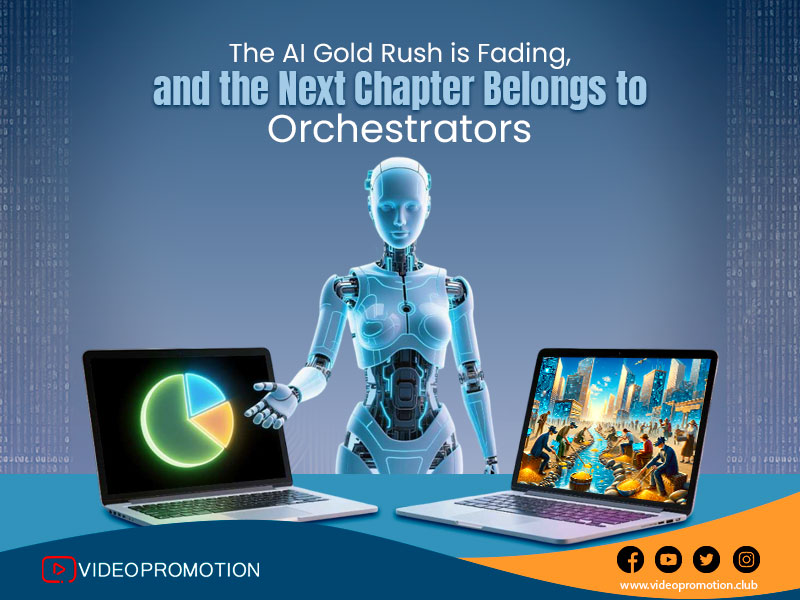
For the past two years, you have been operating inside what felt like an AI gold rush, a phase driven by excitement, novelty, and constant discovery. New tools appeared at a rapid pace, each promising speed, creativity, and competitive advantage. The instinct was to adopt quickly, experiment often, and focus on output that looked impressive on the surface. It was a period shaped by curiosity and fear of falling behind, and while it delivered momentum, it was never designed to last.
That phase is now fading. A more serious era is taking its place, one defined by accountability and real impact. Recent market signals have sparked loud reactions, with many quick to label them as disappointment or slowing demand. That interpretation misses the larger shift happening beneath the surface. This is not a pullback, but a sign of maturity.
What is the next phase?
AI is moving into a production-focused phase where performance matters more than possibility. You are no longer asking if a tool can generate something interesting. You are asking if it fits inside existing workflows, connects cleanly with current systems, and measurably supports revenue. The appeal of stacking more tools is wearing thin, and the pressure to make existing tools work together is growing. This is where orchestration becomes essential. The real advantage now comes from connecting systems with intention and using them as one coordinated engine rather than isolated parts. The broader market remains fluid, with adoption patterns shifting and platforms changing quickly. In that environment, flexibility matters.
The next era of AI will favor those who prioritize cohesion, clarity, and outcomes that stand the test of time.
What is the ‘Pilot Theater’ problem?
The marketing technology landscape has more tools than ever, yet actual usage keeps shrinking. Most companies pay for full stacks but extract value from only a fraction, a gap that feels sharper as budgets tighten. During the earlier rush, point solutions were added to fix specific problems. There was one tool for writing, another for creativity, and another for optimization. Teams became skilled soloists, but nothing was connected. The result was impressive demos and dashboards that look innovative but fail to deliver enterprise ROI. Tools sat in silos, data did not flow, and insights stopped short of action.
The solution is not more tools. Real value comes from orchestration, connecting what already exists to drive meaningful results.
Pilot Theater in P&L:
Budget lag: A CTV campaign drives a 40% jump in branded search, but without automated bidding or budget shifts, the opportunity disappears before the next meeting, and competitors capture the demand.
Experience mismatch: A prospect engages with a LinkedIn Thought Leader Ad and visits the pricing page, signaling strong intent, yet the demand platform retargets them with a generic brand ad, moving them backward in the funnel.
Content misalignment: Sales loses late-stage deals because compliance blocks contracts, while content teams keep producing top-funnel stories instead of ROI-focused resources that could close deals.
The signals and technology exist, but coordination is missing. This is why pressure is rising, with most CEOs expecting AI to deliver measurable ROI within three years. Flashy pilots alone no longer protect revenue, and the orchestration gap has become a real business risk.
The era of agentic orchestration
Many still mistake automation for orchestration. Automation follows rigid rules, while orchestration adapts to achieve goals using the best tools and conditions. In this AI era, systems can observe, coordinate, and optimize across your stack. Orchestration acts as the nervous system of marketing, connecting signals and triggering the next best action. Relying on a single platform is risky; building adaptive orchestration is essential to stay ahead as the ecosystem shifts.
What is real orchestration?
The state of AI is progressing a lot right now. Intelligent feedback loops are replacing manual handoffs, and here are the examples.
Many still mistake automation for orchestration. Automation follows rigid rules, while orchestration adapts to achieve goals using the best tools and conditions. In this AI era, systems can observe, coordinate, and optimize across your stack. Orchestration acts as the nervous system of marketing, connecting signals and triggering the next best action. Relying on a single platform is risky; building adaptive orchestration is essential to stay ahead as the ecosystem shifts.
When prospects exposed to CTV ads show three times higher click-through rates on branded search terms, an adaptive orchestration system kicks in. It automatically adjusts bids and reallocates budget toward this high-intent segment in real time, ensuring the demand you generated is captured. Instead of letting competitors take advantage, every signal is turned into action. This maximizes ROI and keeps your campaigns efficient and coordinated. Furthermore, this keeps it fully aligned with actual market behavior.
When conversation intelligence highlights repeated blockers like security certifications, integration timelines, or ROI proof, an orchestration system acts. It identifies missing bottom-funnel assets and triggers the content team to prioritize them. This ensures materials match real buyer needs. Instead of following an outdated editorial calendar, content becomes purposeful. It closes gaps and supports deals at the moments that matter most.
The era of the ‘Builder’ leader
The 2025 State of Martech report highlights a major shift: custom-built internal platforms grew from 2% to 10% of core stacks, a fivefold increase in just one year. Marketing teams are increasingly acting like product teams, with product management tools rising from 23% to 42%, the fastest growth among all martech categories. Off-the-shelf solutions are not solving coordination fast enough, so leaders are building their own systems. This trend mirrors AI platforms, where deep integration drives success. The takeaway for marketers is clear: connecting tools and systems effectively creates a real competitive advantage.
So, ignore the hot takes claiming AI’s era is over or that the bubble is bursting. What is really ending is AI tourism, the phase of experimenting for show. The focus now is on real impact and orchestration.
If you are a content creator with a YouTube
channel that needs real engagement, Video Promotion Club is the right service
for you. This YouTube video marketing company offers organic views and audience
engagement at an affordable rate.
.
Comments
Leave A Reply