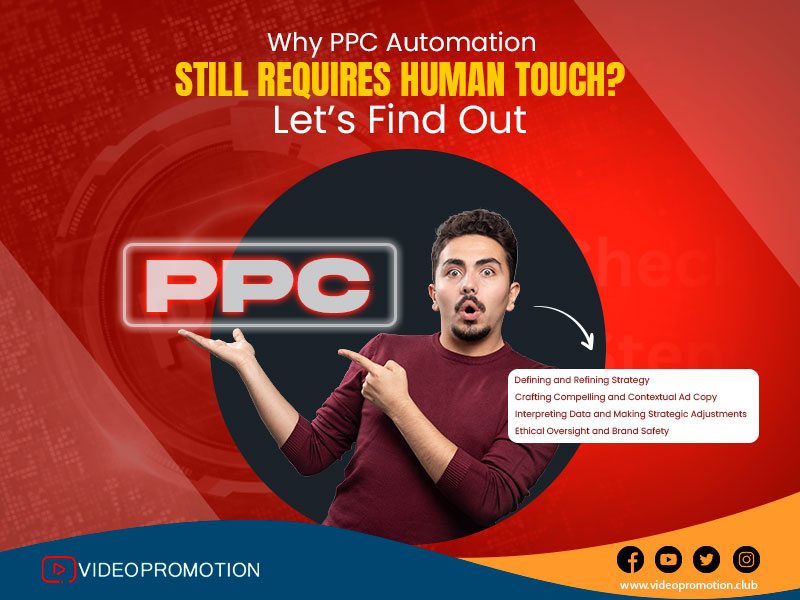
The emergence of AI in every sector has
turned many business operations into automated systems. But even automation can
create problems for a company, and PPC automation is the prime example of that,
as it can easily go off track without human intervention. PPC automation is
currently at the forefront for 2026, and most systems are running campaigns
automatically, which severely transforms the situation for the PPC experts.
However, it is proven that even the
smartest systems can go through failure if there are no humans to take care of
them. Over-reliance on automation can lead to real risk factors, which include
algorithmic bias, quirks of the platform, poor lead quality, strategic
misalignment, and many others. As automation has become even smarter, the
responsibility of proving the value of human insights has become even heavier.
Let’s find four situations when your expertise will become optional but a
mandatory solution.
New Campaigns and Product Launches
should be Monitored Closely
Automated systems are more likely to rely
on historical data when they need to optimize their performance for certain
goals. It is difficult for the new campaigns and new product launches as they
lack the volume and context that the algorithm might need to make informed
decisions instead of humans. Human experts are needed in this case who can help
in refining RSA headlines, shaping targeting, and guiding the conversion
path. With the help of your input, the system can be upgraded beyond the default
“best practices”.
You need to step in when the campaign
structure or the match type overrides. The oversights are not limited to
product launches, and when it comes to B2B marketing, human judgment becomes
crucial. In case of a new product launch, focus on the following key areas,
Overseeing Large Brand Initiatives and
Budget Changes
If a brand executive decides to suddenly
spend a huge amount on paid searches, you need to closely monitor each
campaign. The algorithm does not react or change when such money is transacted,
and it can put the entire campaign off balance. When the automated systems
chase the expenditure from yesterday before settling down, it can cause some
costly misfires. The opposite can also happen when you get into the
“use-it-or-lose-it” situation, where you are required to spend a certain
budget. In that case, you will need to allocate your spending in different
campaigns that can handle that volume so that you do not miss the target
entirely.
When the brand goals override the
performance metrics, there is no other option than management. When the market
is prone to certain changes based on the target audiences or a certain
demographic, the paid search expert is required to override algorithm conversion
in order to make sure that the message reaches the right audience base. The
abrupt shifts, like chasing new markets, forcing spend, or cutting
budgets, all need to be handled with manual supervision, as AI-driven automated
systems cannot make those changes for you. It is designed to assist, but the
formula for action is only provided by human intervention.
Niche Accounts and Low-volume Accounts
require More Oversight than Larger Accounts
The automation platforms are hungry for
data, and these platforms cannot handle accounts that do not generate enough
transactional data, which is important for AI optimization. Algorithms cannot
work with limited data and thus, the results lead to underperformance. For such
accounts, manual management is not just important but essential for managing
keywords, bids, and targeting audiences. Quick adjustments and responses are
allowed in case of human oversight, and it is perfect for subtle performance changes.
Small and local campaigns require the most human attention as they frequently
face challenges. Here are a few effective tactics to help,
Monitor Automated Campaigns Equipped to
Website Structures
Automated systems are designed to operate
within the confined data only through the ad platform. These systems are unable
to detect external factors that can significantly break the conversion path.
This risk of bidding algorithms can be found in campaign types like Dynamic
Search Ads (DSA), Performance Max (PMax), and AI Max. They mainly rely on feed
data, site crawls, and conversion signals, and these metrics can be easily
disrupted by tracing issues, release cycles, and site updates. The best way to handle
it would be hiring a professional PPC expert who can manually take care of
things with their in-depth knowledge and experience, which AI-powered systems
do not have. You need to make sure the site is updated at the right time
without disrupting the automated systems. It will also require the help of tech
teams and SEO experts for better results in the market.
Final Thoughts
The aforementioned discussion makes it
clear that automated and AI-powered systems are not the only solution for all
kinds of businesses, as they also require a fair amount of human involvement.
If you are struggling with such ad issues for YouTube and do not have much time
to monitor and tweak them manually, it is recommended to hire a professional
agency like Video Promotion Club that can help. Visit the website to know more.
Comments
Leave A Reply